Hiring a Wedding Videographer
Hiring a wedding videographer is the decision that decides whether you get to relive the day or only remember it in stills. Photography freezes a moment; video returns the sound of the vows, the laugh in the speeches, the song that emptied the dance floor. Because the film is made while the day is happening and cannot be reshot, the work is less about finding the fanciest camera and more about matching a storytelling style, a dependable workflow, and clear contract terms to the kind of memories you actually want. This guide walks through how to choose a style, vet real films, compare packages by what you receive, plan the edit and delivery, build a shot list together, and read the contract so you book someone who delivers the film you will actually watch, not the one you assumed you would get.
Decide the style before you shop
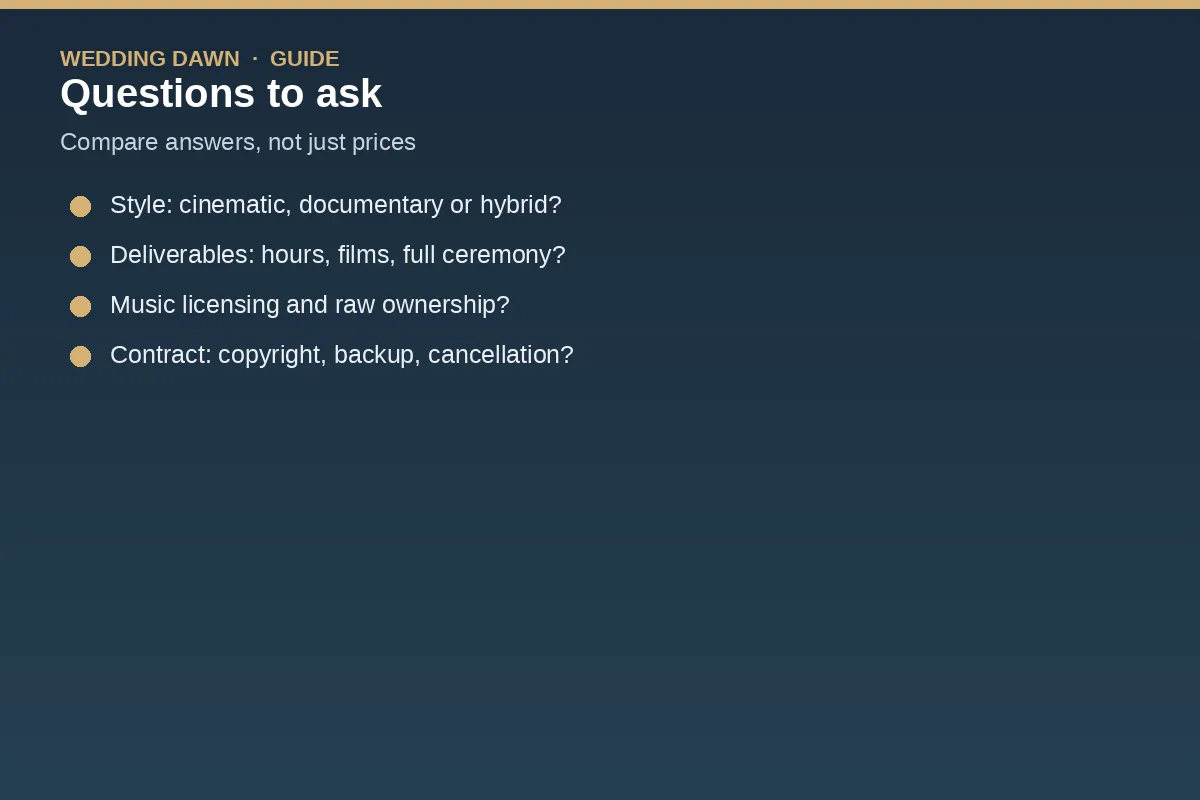
A wedding film is not one product; it is a spectrum. Cinematic or highlight-reel style compresses the day into a three-to-eight-minute set piece set to music, with careful pacing, graded color, and a strong emotional arc — beautiful to share, light to rewatch. Documentary or full-ceremony style keeps the day whole: the full ceremony, the unscripted toasts, the long dinner conversations, often four hours or more, edited for clarity rather than drama. A hybrid or storytelling style blends the two, opening with a short cinematic film and including the longer raw or lightly edited coverage as a second file. Most working videographers lean one way but can flex, so the real question is how you will actually watch it: if you want the whole day as a record, a highlight-only film will leave you frustrated; if you want one beautiful thing to post, a four-hour raw file will gather digital dust.
- Cinematic: 3–8 min, music-led, color-graded, shareable.
- Documentary: full ceremony and speeches, edited for clarity.
- Hybrid: short film plus longer raw or lightly edited coverage.
- Match the style to how you will actually watch it.
Shortlist by full films, not highlight reels
Anyone can cut a ninety-second trailer that looks magical. What you need to see is how the same person handles a dim church, a windswept outdoor ceremony, or a microphone that feeds back during the vows. Ask every candidate for two or three full films from real weddings as close to yours as possible: same venue type, same light, same size. Watch the quiet parts — the guests arriving, the lull between courses, the shy relative at the edge of the dance floor — because that is where weaker editing turns tedious. Confirm they have shot your kind of day, especially if it is religious, outdoor, or in tricky light, and ask what backup they carry when a camera, recorder, or gimbal fails mid-event. A videographer who gladly shows entire films usually has nothing to hide.
Watch for soft red flags early. Anyone who only sends trailers, who cannot say how many weddings they have filmed, or who cannot describe your venue's sound and light setup is a risk. Equally telling is how they talk about your day: the good ones ask about the moments that matter to you and the songs you care about, not just which package you want.
Compare packages by deliverables, not by price
Two quotes at the same price can be worlds apart once you read what is inside. The numbers that matter are coverage hours, whether a second camera or operator is included, the length and number of films you receive, whether the full ceremony and speeches are delivered in full, the turnaround time, and whether an engagement or rehearsal film is part of the deal. A cheaper package that ends at dinner means no first-dance or exit footage; a pricier one with a second operator often captures both sides of the aisle and the room before guests enter. Decide what you care about most — the cinematic film, the complete record, or both — then compare like for like by asking each vendor for a written itemisation.
- Coverage hours: does it reach the exit or end at dinner?
- Second camera or operator for two angles.
- Length and number of films; full ceremony and speeches?
- Turnaround time and what add-ons cost.
Understand the editing and delivery timeline
A wedding film is not shot and shipped the next day. Editing a cinematic film typically takes six to sixteen weeks; a documentary or full-day edit can take longer. Ask for a written delivery date, not a vague 'soon', and find out whether you receive a download link, a USB, or both. Clarify who picks the music: many videographers license tracks themselves because commercial songs trigger copyright claims on social platforms, so a film set to a song you love may never be postable. Ask whether you can request trims or a different song, and whether the raw footage is yours to keep. A clear timeline with a date protects you when the wedding high fades and the inbox goes quiet.
Build a shot list with your videographer
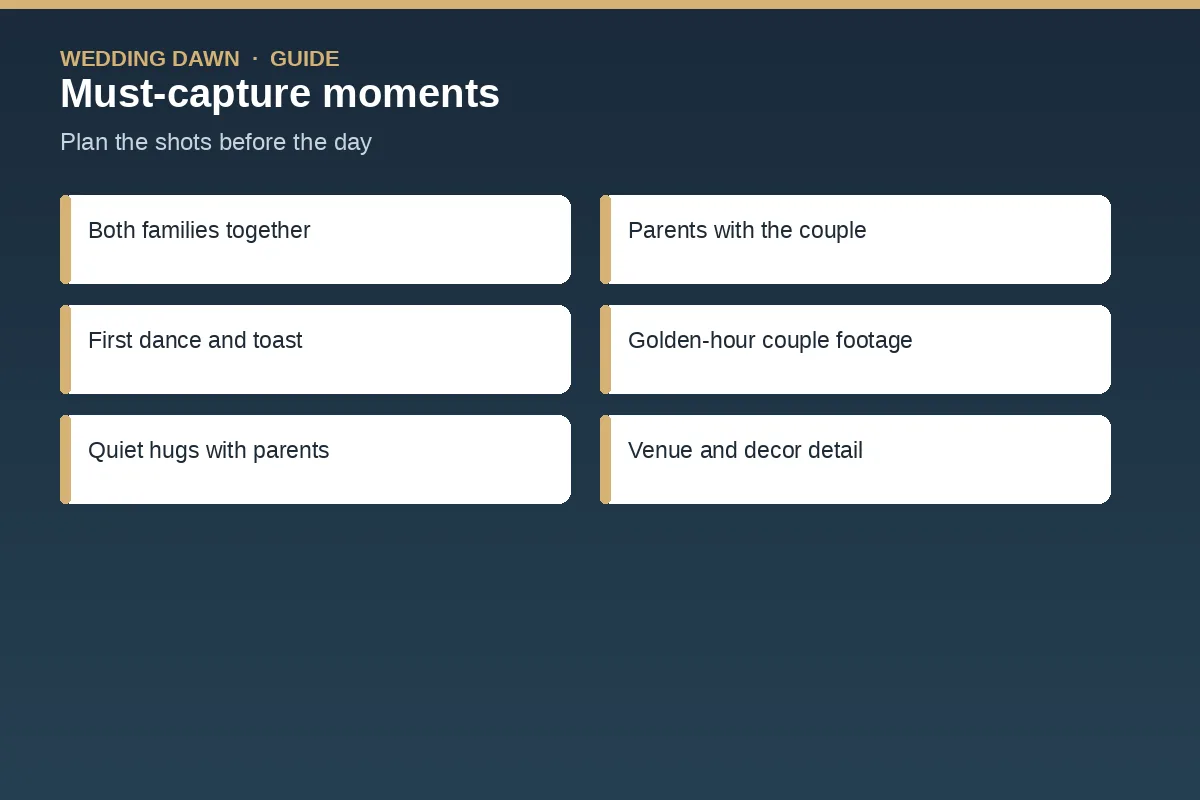
Even the best filmmaker cannot read your mind about which people and moments must appear. Sit down with your partner and list the must-haves: both families together, each parent with the couple, the wedding party, and any grandparent or step-family who should be honored on film. Send this list a week before and assign a relative or coordinator to help gather people so the formal block stays short. Beyond formals, note the candid moments you will regret missing — the toast, the first dance, the quiet hug with a parent — and tell the videographer the songs you want featured so the edit can build around them. If you want golden-hour couple footage, protect that window in the run sheet before the sun decides for you.
Read the contract for these clauses
The contract is where cheerful conversations become obligations, so read it slowly. Confirm who owns the copyright and what license you receive; most videographers keep copyright but grant you a personal license to watch and share the finished film, which is normal, but you should see it in writing. Check the deposit schedule, the cancellation terms, and whether the price is locked through your date or can rise with travel or equipment surcharges. Look for a clear backup plan if the videographer is ill or double-booked, a delivery guarantee with a date, and meal and overtime expectations. Put every verbal promise — an extra hour, a specific song, a same-week teaser — into the written agreement, because assistants turn over and memory fades.
- Copyright and the license you receive in writing.
- Deposit schedule, cancellation, and price-lock terms.
- Backup plan and equipment-failure protection.
- Delivery date, meal, and overtime expectations.
Mistakes that quietly cost you the film
The common ones are predictable. Booking on price alone and discovering coverage ends before the dance. Skipping the call and realising on the day you have no rapport and they misread the tone you wanted. Assuming the trailer is the whole film and being left without the ceremony you promised your grandparents. Forgetting to mention the songs that matter, so the edit lands flat. And assuming the videographer will 'just know' which uncle matters. None of these are about talent; they are about process — and process is exactly what this guide is meant to hand you before you sign.
Step by step
Clarify your style
Name cinematic, documentary, or hybrid as the style you want before contacting anyone.
Collect full films
Ask each candidate for two or three complete real-wedding films similar to yours.
Compare deliverables
Line up hours, film count and length, second camera, full ceremony, and turnaround in writing.
Plan edit, delivery, shot list
Confirm music licensing, delivery date, raw ownership, and send a must-have list a week ahead.
Sign with eyes open
Read copyright, deposit, backup, and cancellation clauses before you pay the deposit.
Quick checklist
- Matched the videographer's style to how you will actually watch the film.
- Reviewed at least two or three full films, not just trailers.
- Confirmed deliverables: hours, film count, second camera, full ceremony, turnaround.
- Agreed music licensing, delivery date, and raw-footage ownership in writing.
- Read copyright, deposit, backup, and cancellation clauses in the contract.
FAQ
Do I need a second camera or operator?
Not always, but a second angle captures both sides of the aisle, the room before guests enter, and candids while the main operator is busy with formals. For weddings over about 120 guests or with a tight timeline, it is usually worth it.
How long until we get the film?
A cinematic film commonly takes six to sixteen weeks; a documentary or full-day edit can take longer. A written delivery date protects you; a vague 'soon' does not. Ask what happens if they miss it.
Who chooses the music?
Many videographers license tracks themselves because commercial songs trigger copyright claims on social platforms, so a film set to your favorite song may never be postable. Ask whether you can request a specific licensed track or a different song.
Do we get the raw footage?
Sometimes yes, sometimes for an extra fee, sometimes no. Clarify ownership and whether the raws are yours to keep forever, because they are the only unedited record of the day.
What if the videographer is ill on the day?
A professional should have a vetted backup network and state in the contract who shoots if they cannot. Never assume; confirm the clause and a named fallback before you sign.
Sources
- PPA — Professional Photographers of America, video resources Trade-body guidance on contracts, copyright, and what to ask a wedding videographer; checked 2026-11.
- WeddingWire — vendor contract checklist Common clauses and red flags in video contracts; checked 2026-11.
- The Knot — questions to ask wedding videographers Interview question lists and deliverable comparisons; checked 2026-11.