Wedding Rehearsal Dinner Guide
The rehearsal dinner is a warm, intimate pre-wedding celebration that lets your closest family and friends practice the ceremony, toast to the couple, and bond before the big day. This guide walks you through planning, timing, guest lists, toasts, and activities so you can create a memorable evening.
Choose the right timing—typically the evening before the wedding. This gives everyone time to settle in and rest before the big day. It allows the wedding party to practice the ceremony, review the logistics, and bond in a relaxed setting.
Choose the Right Timing
The rehearsal dinner is typically held the evening before the wedding, giving everyone time to settle in and rest before the big day. This timing allows the wedding party to practice the ceremony, review the logistics, and bond in a relaxed setting. Avoid scheduling it too close to the wedding day (less than 24 hours) as it may add unnecessary stress.
Select the Venue
Choose a venue that can accommodate 30–50 guests comfortably. Popular options include the wedding venue itself, a family member's home, a restaurant, or a community hall. Consider factors like parking, accessibility, and whether the space allows for both dining and activities. If hosting at a restaurant, book a private room to ensure privacy and better service.
Create a Guest List
Keep the guest list intimate—typically 30–50 people. Include the wedding party, parents, siblings, and grandparents. You may also invite a few close friends or cousins. Avoid inviting coworkers or distant relatives unless they are particularly close to the couple. This ensures the atmosphere remains warm and focused on the couple and their immediate family.
Send Invitations Early
Send rehearsal dinner invitations 2–3 weeks before the event. Include the date, time, location, dress code (if any), and RSVP deadline. A casual dress code is typical, but specify if you want guests to dress up. Follow up with a reminder a week before the event to ensure attendance.
Plan the Timeline
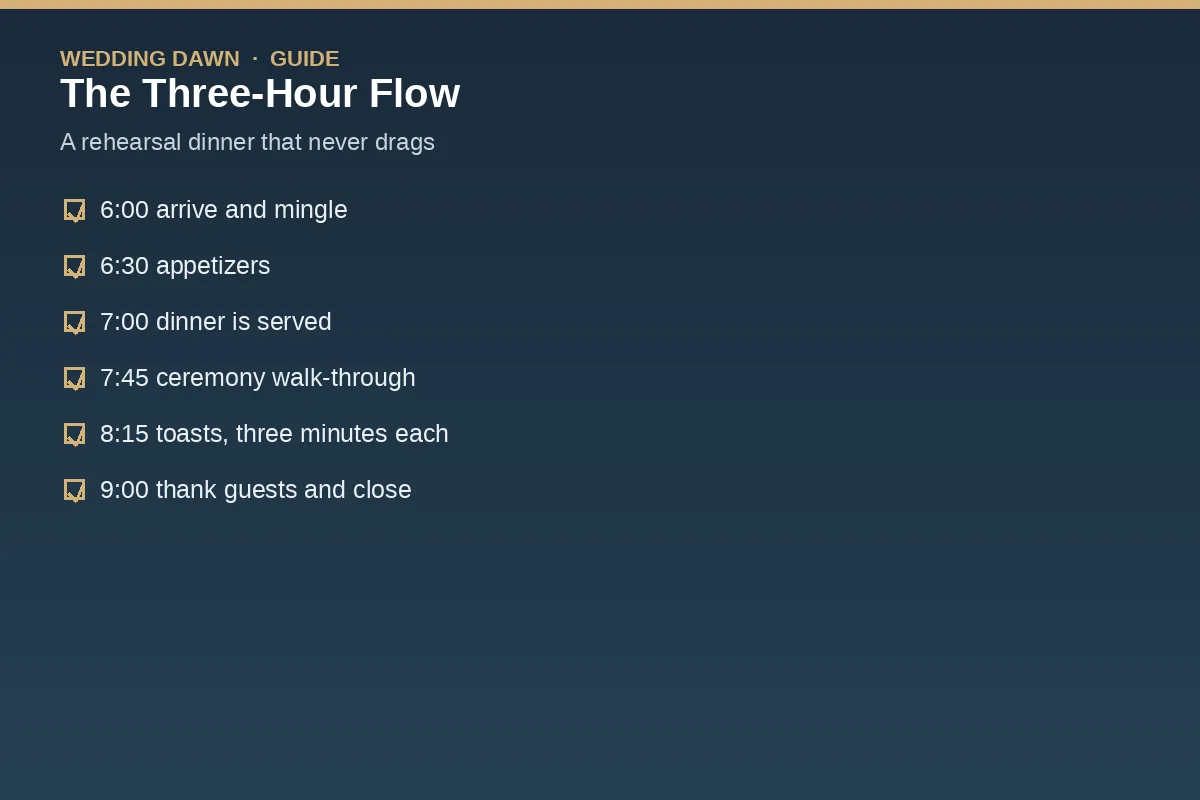
A typical rehearsal dinner runs from 6–9 PM. Plan the flow: 6:00–6:30 PM arrival and mingling, 6:30–7:00 PM appetizers, 7:00–7:45 PM dinner, 7:45–8:15 PM ceremony rehearsal, 8:15–9:00 PM toasts and activities. Build in buffer time for unexpected delays. Communicate the schedule clearly to guests so everyone knows when to arrive and when to be seated.
Rehearse the Ceremony
Use the rehearsal dinner to practice the wedding ceremony. Walk through the entire process, including processional, readings, vows, rings exchange, and recessional. Have the officiant guide the couple through each step. This helps everyone feel comfortable and ensures no technical issues arise during the actual wedding. Record the rehearsal if possible to review later.
Prepare Toasts
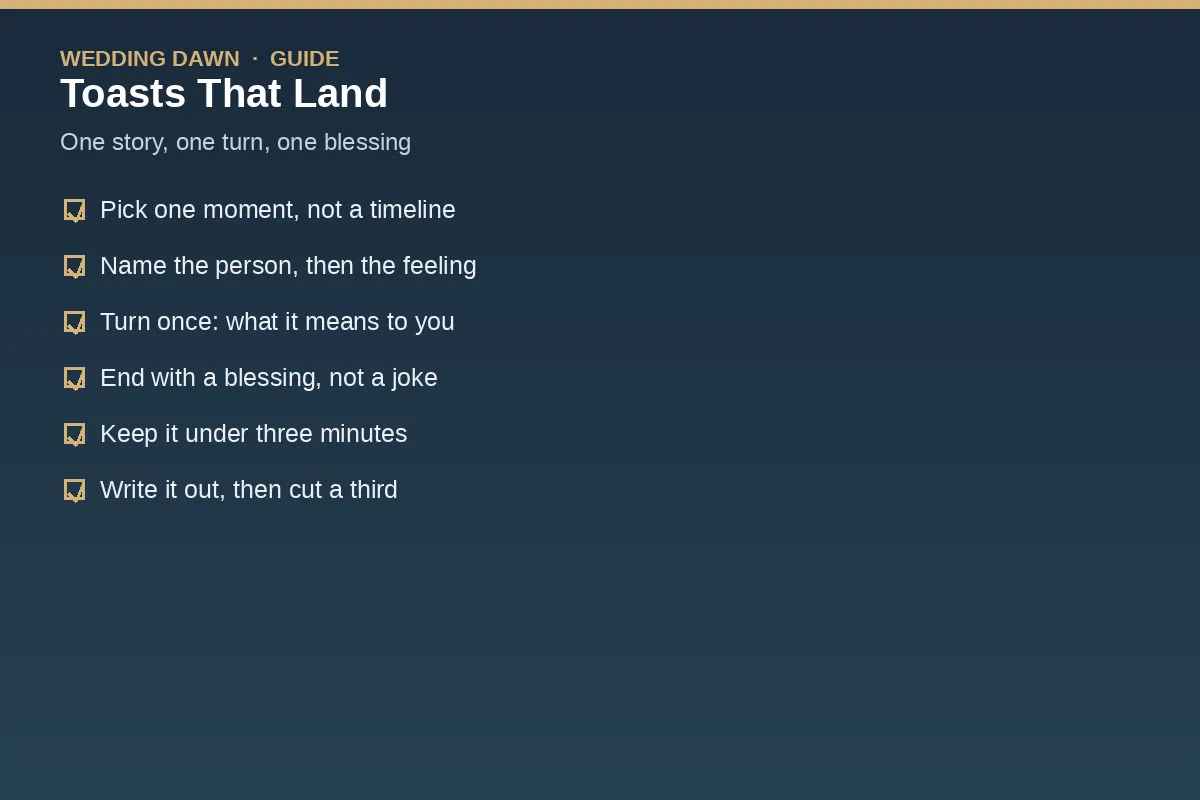
Plan who will give toasts and what they will say. Traditionally, the best man, maid of honor, parents, and sometimes siblings give speeches. Provide a written outline or prompt sheet to each speaker to help them stay on track. Keep speeches concise (under 3 minutes each) and heartfelt. You may also include a few fun games or activities to keep the energy high.
Plan Activities and Entertainment
Consider adding a few activities to keep guests engaged. Popular options include a photo booth, a slide show of the couple's photos, a trivia game about the couple, or a few icebreaker questions. You might also hire a musician for background music or arrange a simple DIY station for guests to make wedding favors. Keep activities light and optional so guests can relax.
Handle Dietary Restrictions
Ask guests about dietary restrictions when sending invitations. Common needs include vegetarian, vegan, gluten-free, and allergies. Provide a variety of options on the menu and clearly label dishes. Follow up with guests a few days before the dinner to confirm their needs. Having backup dishes ready ensures everyone can enjoy the meal without worry.
Who Hosts, and Who Pays
Tradition hands the rehearsal dinner to the groom's parents, but that custom fits fewer families every year. What matters is that someone owns the evening before invitations go out, not that the bill lands on a particular side. Decide early whether the couple hosts, one set of parents hosts, or two households split it, and write that decision down. If two families share costs, agree on a total and a per-head ceiling first, then let the host choose the menu inside that number. When the couple pays, say so plainly on the invitation so no parent feels quietly sidelined. If you are hosting a casual no-host gathering where guests buy their own meals, label it that way from the first message; surprises about money damage the mood faster than any late toast. Give the host one clear job on the night: welcome people, keep the schedule, and stay off the phone. Everything else can be delegated.
A Budget That Survives the Night
Rehearsal dinners overspend because they feel like a small add-on to a very large purchase. Build the number from the guest list instead. Multiply headcount by a food-and-drink figure you have actually seen on a quote, then add the room fee, service charge, rentals, printed invitations, small gifts for the wedding party, and any transport you are covering. Add a fifteen percent buffer for the extra bottle, the guest who brings a plus-one, and the tip you will want to leave. Three levers keep the total honest: cut the list before you cut the menu, choose a set menu instead of open ordering, and offer one good non-alcoholic drink rather than a full second bar. Ask the venue what the final headcount deadline is and put it in your calendar, because that date, not the wedding date, is what controls the bill.
When Plans Collide: Rain, Late Flights, and Family Seating
Outdoor rehearsal dinners need a real indoor fallback, not a tent you hope to rent later. Confirm the backup room in the same contract, and decide who makes the call and by what hour. Flights delay people; hold dinner no more than twenty minutes past the stated start, then serve, and keep a plate aside for the late arrival. Seating needs more thought than it usually gets. Divorced parents, estranged siblings, and two sets of in-laws can all sit in one room if you place them at different tables with hosts who know the history. Put the people who need to talk near each other and the people who need distance at opposite ends. Give one trusted friend the vendor phone for the evening, so the host can be present rather than managing. Print dietary cards with the place cards; it spares the kitchen a round of questioning while food goes cold.
Follow Up and Send Thank-You Notes
Send a thank-you note to each guest within two weeks of the rehearsal dinner. Express your gratitude for their attendance and support. Mention specific highlights, such as a particularly touching toast or a fun activity. This small gesture shows appreciation and strengthens relationships with your loved ones before the wedding.
One practical test of the plan: read the guest list aloud and name, for each table, who will greet people and who will handle a complaint. If a name draws a blank, the table is one host short. Do the same for the room itself. Who unlocks the door, who knows where the coats go, who carries the gift envelopes back to the hotel? These are small jobs that ruin an evening when nobody owns them, and they take ten minutes to assign in advance. Print a one-page run sheet: the schedule, the vendor phone numbers, the two people who can make decisions, and the phrase the hired staff should use if a guest asks a question they cannot answer. Hand it to the venue on arrival and keep a copy on your phone.
Step by step
Book the venue
Reserve a private room or the wedding venue itself three to four weeks out; confirm capacity for 30-50 guests and parking.
Set the guest list
Limit it to the wedding party, parents, siblings, grandparents and a few genuinely close friends.
Send invitations
Send two to three weeks ahead with date, time, place, dress code and an RSVP deadline; remind one week before.
Build the run of show
Arrival 6:00, appetizers 6:30, dinner 7:00, rehearsal 7:45, toasts 8:15, close 9:00.
Assign a host
One person keeps time, introduces speakers and ends each toast cleanly so the evening never stalls.
Quick checklist
- Venue booked and capacity confirmed
- Guest list capped at 30-50 names
- Invitations sent 2-3 weeks ahead
- Dietary needs collected and labelled
- Run of show shared with guests
- Host or toastmaster briefed
- Ceremony rehearsal scheduled with the officiant
- Speaker outlines collected
- Backup dishes confirmed with caterer
- Thank-you notes planned for the following week
FAQ
How long should a rehearsal dinner last?
About three hours, typically 6 to 9 PM. That is enough for dinner, the ceremony walk-through, toasts and a little social time without running late.
Who pays for the rehearsal dinner?
Traditionally the groom's parents, but today many couples host and pay themselves. Decide before invitations go out so nobody is surprised.
Should I invite out-of-town guests?
Only if the list stays manageable. Many couples host a separate casual welcome drinks for travellers instead of expanding the dinner.
What should guests wear?
Smart casual is the safe default. State it on the invitation so nobody arrives over- or under-dressed.
Do we have to rehearse the ceremony at dinner?
It is the most useful part of the evening. Even a 20-minute walk-through of positions, readings and the ring handoff prevents most day-of confusion.
Can the rehearsal dinner be casual, like a barbecue?
Yes. Backyard barbecues and pizza nights are common and cost far less. Keep the timing and the toasts, drop the formality.
Sources
- Brides — rehearsal dinner ideas Etiquette and run-of-show conventions, checked 2026-11.
- The Knot — rehearsal dinner planning Guest list size, timing and who hosts, checked 2026-11.
- Etsy — rehearsal dinner ideas Low-key formats and décor, checked 2026-11.