Wedding Lighting: A Practical Guide
Lighting is the single most overlooked element of wedding planning, and the one that quietly shapes everything else: how the room feels, how your photos turn out, how long guests stay on the dance floor. The short answer most couples need: assess the venue's existing light first, then spend your lighting budget on three things in this order, dimmable ambient light for the dining room, dedicated dance floor lighting, and exterior or entrance lighting for arrival and late-night transitions.
If your venue is already warm, dimmable and layered, you may need almost nothing beyond candles and a few uplights. If it is a bright, bare function room with fluorescent ceiling panels, lighting is not a nice-to-have; it is usually the difference between a space that feels flat and one that feels intentional. This guide walks through how to evaluate a venue, what the main fixture types actually do, how to budget realistically, what to ask lighting vendors, and the pitfalls that catch couples out every season.
Start With What the Venue Already Has
Before you price a single fixture, visit your venue at the same time of day as your reception. A barn that looks romantic at 7pm in summer may be pitch black by dinner in December, and a ballroom flooded with afternoon sun may need blackout solutions rather than more light. Take photos on your phone during your site visit; phone cameras exaggerate how dim or yellow a space will read on camera, which is actually useful, because that is roughly what your photographer will fight against.
Ask the venue three questions in writing. First, is the main room lighting dimmable, and who controls it on the day? Second, are there restrictions on candles, open flames or rigging from the ceiling? Third, what power is available where, and are there extra charges for using it? Many venues include basic house lighting but charge separately if you want to bring in a lighting technician or access three-phase power for larger rigs.
The daylight problem nobody mentions
For daytime or early-evening receptions, harsh overhead light matters more than darkness. Fluorescent tubes and cool white LEDs give skin a grey, unflattering cast that no photographer fully corrects. If your venue has them, ask whether they can be switched off or swapped for warm bulbs for your date. If not, factor in budget for warm uplights and pin-spotting to rebalance the room. A simple rule: warm light around 2700 to 3000 Kelvin reads flattering on skin; anything noticeably blue-white will work against your photos.
Know the Fixture Types and What They Do
Lighting jargon is confusing, so here is a plain-language breakdown of what you will actually be quoted.
- Uplights: small units placed around a room's perimeter that wash the walls with colour or warm white. They create depth and atmosphere cheaply and are usually the best-value lighting spend. A common range for a typical reception room is somewhere between 8 and 20 units depending on size.
- Pin spots: narrow beams aimed at centrepieces or the cake so they stay visible in a dimmed room. Without them, expensive floral centrepieces literally disappear once the main lights drop.
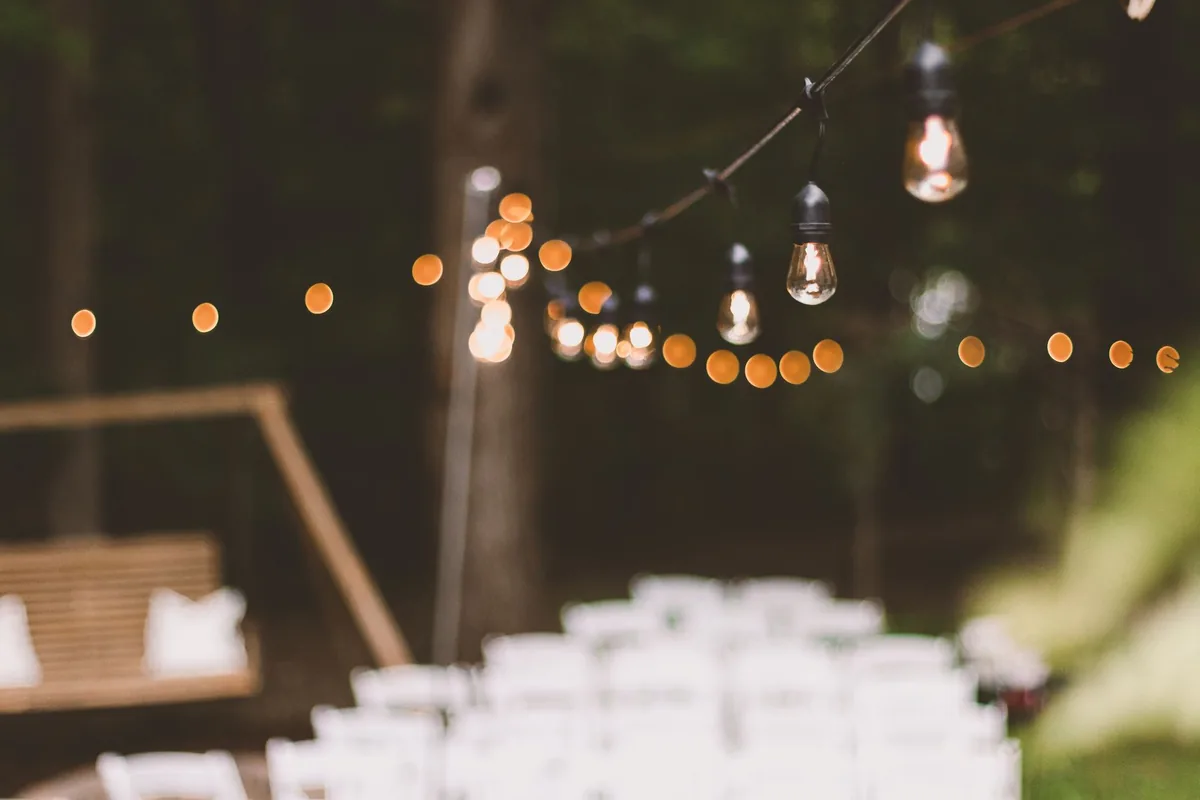
- Festoons and fairy lights: strings of warm bulbs that add texture overhead, on marquees, across courtyards or along fences. They read beautifully in photos and are usually priced per length or per string.
- Dance floor lighting: moving heads, washes and effects that activate for the party. Good ones respond to the music and stay off the faces of seated guests; bad ones strobe blindly and make people retreat to their seats.
- Gobo projection: a stencil in front of a light that projects a monogram or pattern onto a wall or floor. A nice-to-have, not a foundation; skip it if the budget is tight.
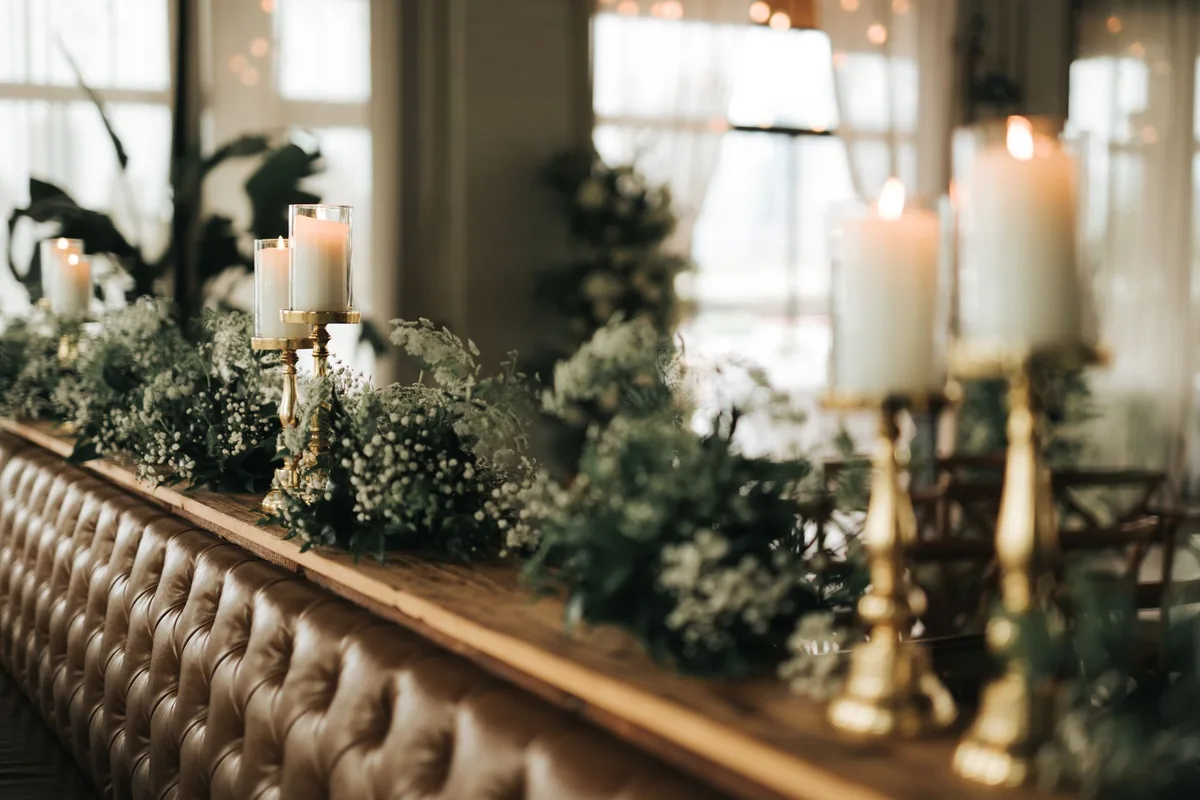
- Practicals: real light sources like table lamps, candles and lanterns that make a room feel lived-in. Caterers and planners often forget them, but they are what separate a styled room from a lit one.
Budget: Where Money Actually Goes
Lighting pricing usually splits into equipment, labour and power. Equipment cost scales with the number of fixtures and whether they are basic battery uplights or professional units requiring rigging. Labour depends on setup time: a lighting crew that needs three or four hours in the room before guests arrive costs more than one who can work alongside other suppliers. Power costs appear at venues with limited supply, where the supplier brings generators or distro.
For a mid-size wedding in a standard function room, a basic uplighting package is typically the cheapest meaningful upgrade and usually costs a fraction of a full design package. Custom designs, festoon canopies and dance floor rigs sit at the higher end, and charges climb quickly once rigging, technicians and overnight pickups are involved. When comparing quotes, always ask for a line-item breakdown: number and type of fixtures, setup and collection times, whether a technician stays on site, and what happens if a unit fails mid-event.
Two practical thresholds to apply. If lighting would take more than roughly ten percent of your total budget, you are usually over-specifying unless the venue is genuinely bare or you are building a space from scratch, like a marquee. And if you are choosing between a bigger florals order and proper lighting, choose the lighting; flowers vanish in a dim room, lighting makes everything else work.
Lighting and Your Photographer: Coordinate Early
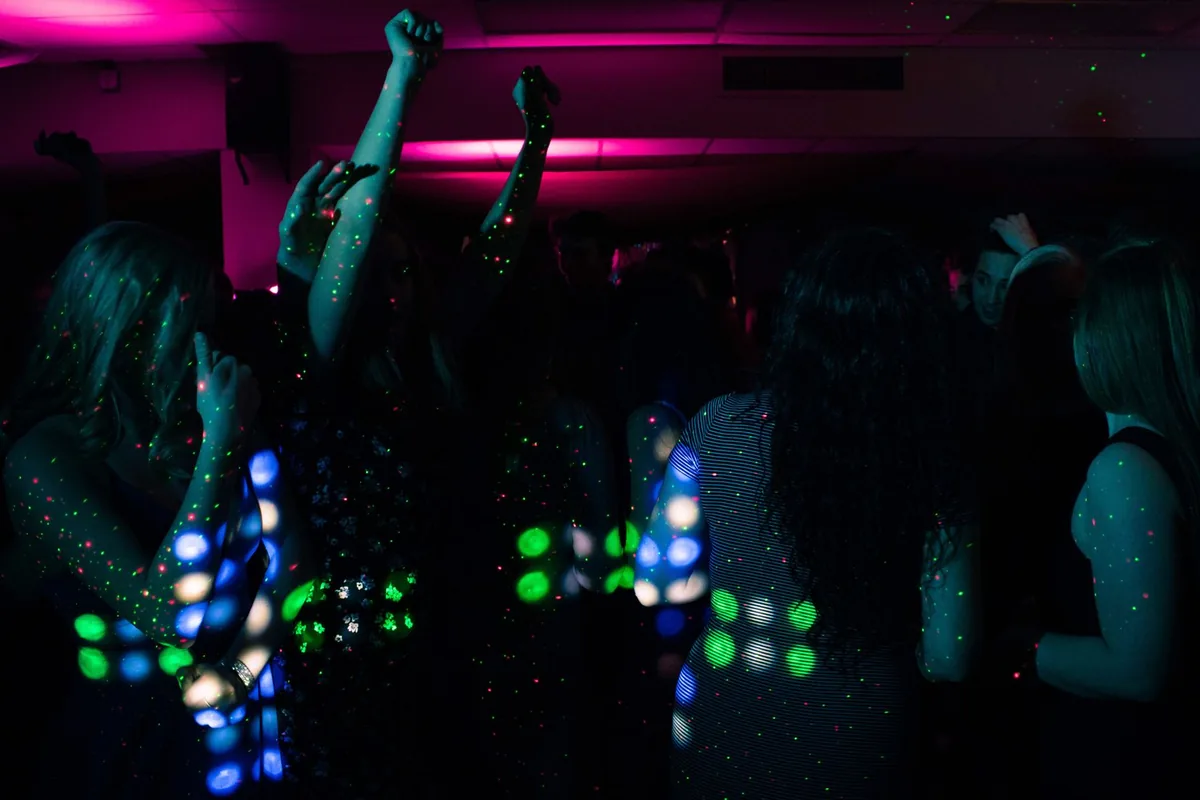
The most valuable conversation you can have is between your lighting supplier and your photographer. Photographers generally want a room that is dim but not dark, warm rather than coloured, and with the first dance lit purposefully rather than left to venue house lights. Coloured uplights can be polarising: amber and warm tones flatter skin, while saturated blue, red or green uplights can tint skin in every photo taken in the room. If you love colour, confine it to non-portrait zones, the bar, the exterior, the dance floor, and keep the dining room warm.
Ask your photographer two things: what they need from the room to shoot the first dance well, and whether they bring their own lighting for it. Many bring portable flashes, which solves the dance photos but does nothing for the room's atmosphere, so you still want a purposeful first-dance setup, a focused beam or two on the two of you, with guests in soft background light.
Timelines: When to Sort It Out
Book lighting shortly after your venue, especially for popular fixture types in peak season; good suppliers are often booked 6 to 12 months ahead. Aim to have a plan sketched out by the time you confirm your layout, around 3 to 4 months out, because lighting placement depends on table positions, the bar location and the dance floor footprint.
On the day, lighting crews usually need the room empty of guests but ideally after tables are set, since pin spots and centrepiece lighting can only be aimed at what is in place. If your venue turns the room around on the same day, coordinate the sequence: caterers, then florists, then lighting last with the longest runway to the first dimming moment, usually the first dance.
Questions to Ask a Lighting Supplier
- What exactly is included: fixture count, type, colours available, and any spares brought on site?
Judge quality by three things: how their previous work looks in candid guest photos rather than only styled portfolio shots; whether they talk about your room specifically instead of quoting from a price list; and whether they offer a dimming plan keyed to your schedule. A good supplier asks to see your floor plan and timeline unprompted.
Common Mistakes and Final Checklist
The same errors recur every wedding season, so run through this list before you sign anything.
- Booking lighting before choosing the venue or layout, then paying for fixtures that do not fit the room.
Handled well, lighting is the layer that makes your flowers, tables and dancing look the way you imagined them. Assess the room honestly, spend first on warm dimmable ambient light and the dance floor, coordinate early with your photographer and venue, and get every access time and inclusions in writing.