Wedding Catering Guide: Cost & Menu
Catering is usually the single biggest line item on a wedding budget, and it is also the part guests remember most clearly. Get it right and people talk about the food for years; get it wrong and the complaint outlives the photos. The point of this guide is to help you choose a caterer, set a realistic cost per guest, build a menu that pleases a mixed and sometimes picky crowd, and spot the contract clauses that quietly add thousands to the final bill. Treat catering as three separate decisions — format, vendor, and menu — and you can compare every quote on equal terms instead of being seduced by a low headline number.
Pick the service format that fits your day
Plated, sit-down dinners feel the most formal and give you the most control over portions and flow, but they need more kitchen staff, a tighter service window, and a venue kitchen that can handle a full cook-to-order load. Buffets lower the per-head cost and speed service for large crowds, though they need a smart layout and enough stations to avoid lines at the peak moment after the ceremony. Family-style service puts shared platters on the table, which feels warm and generous, but it relies on table space and on guests actually passing dishes. Food stations and action stations — carving, pasta, taco, sushi — keep energy high for a mingling crowd and suit cocktail-style or long receptions. Food trucks and casual drop-ins work beautifully for after-parties, rehearsal dinners, or laid-back venues, but check power, permits, and weather before you commit. Match the format to your real guest count and your venue's rules before you fall in love with a styled photo.
- Plated: most formal and controlled, but needs more staff and a strong kitchen.
- Buffet: lower per-head cost, faster for big crowds if stations are planned.
- Family-style: warm and social, but needs table space and guest cooperation.
- Food stations and trucks: great for mingling, but watch power and permits.
Budget the true cost per guest
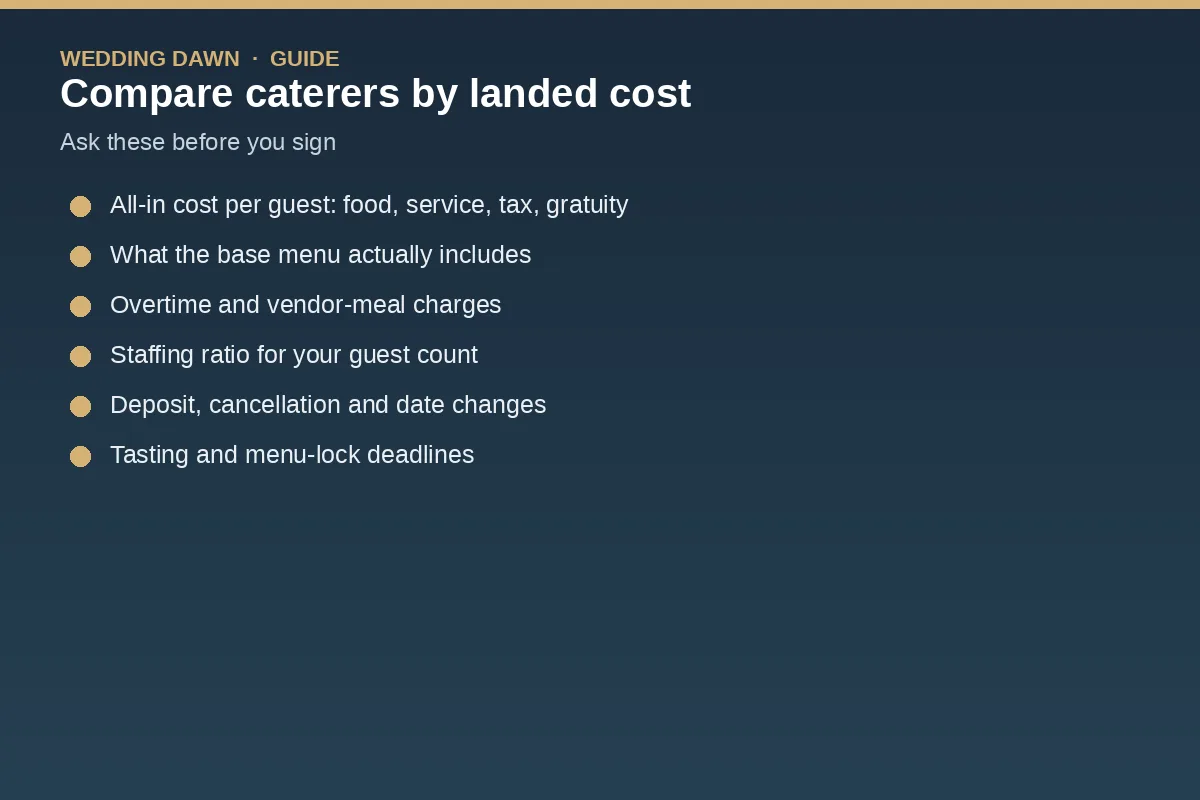
Most couples budget only the food price, then meet the real number at the signing table. The per-guest figure usually stacks several layers: the food itself, non-alcoholic beverages, staffing, rentals if the venue is raw, a service charge that commonly runs 18 to 22 percent, state sales tax, and gratuity. Ask every caterer for a fully itemized per-guest quote that includes set-up, breakdown, and any cake-cutting or corkage fees, so you are comparing the same line items. A simple way to compare vendors is to demand the 'landed cost per guest' in writing before you tour. If one quote looks thirty percent cheaper than the others, it is almost always hiding rentals, bar service, or staffing that you will have to source elsewhere and pay for twice.
Build your catering budget from the top down. Take your overall food-and-beverage ceiling, subtract the bar if you are pricing it separately, and divide what remains by your real headcount — not the dream list, the confirmed number. Remember that children, vendors you are feeding, and out-of-town family on a welcome night all change the math. Keep a line for overage: guest counts almost always drift up in the final six weeks, and most contracts price the final headcount, not the estimate.
- Food and non-alcoholic drinks are only the visible part of the price.
- Service charge, tax, and gratuity commonly add 25 to 35 percent.
- Rentals, cake-cutting, and corkage may sit outside the per-head number.
- Always compare the written landed cost per guest, never the headline.
How to choose a caterer without regret
Shortlist three to five caterers who have recent weddings at your venue or a similar one, because they already know the kitchen limits, load-in path, and timing. A tasting should be more than a polite bite: ask to see a sample final invoice from a wedding near your headcount, the staffing ratio (often about one server per 20 to 25 guests for a buffet and closer to one per 10 to 12 for plated), and exactly how dietary meals are labeled, cooked, and kept separate. Red flags include refusal to itemize, a single contact who goes quiet after the deposit, no written backup plan if the chef is ill, and vague answers on food safety and holding temperatures. Favor teams that ask about your guests and your day, not just which menu you picked.
Check the practical things that decide whether the night runs smoothly. Can they handle your real bar plan, or do they subcontract it? Who owns the timeline on the day — your planner, the venue, or the caterer? Do they carry liability insurance and can they name the venue as additional insured? A caterer who answers these without hesitation is worth more than one whose food is a little better but who leaves the day's logistics to chance.
- Ask for a sample final invoice near your headcount.
- Confirm staffing ratio and who owns the day-of timeline.
- Demand a written backup plan for illness or no-show staff.
- Verify insurance and the ability to name the venue as insured.
Build a menu that pleases a mixed crowd
Design for the median guest, then handle the edges gracefully. Offer one clear vegetarian entrée by default, label the big allergens — gluten, nuts, dairy, shellfish — and keep a kids' option simple and familiar. Seasonal menus are both cheaper and fresher; a winter root-vegetable plate costs far less than out-of-season asparagus flown in for one night. For late receptions, plan a late-night snack so the dance floor stays full and no one leaves hungry. Confirm the caterer can handle vegan, gluten-free, and allergy meals without a surcharge, and ask precisely how they prevent cross-contact in a busy off-site kitchen.
Think about the arc of the evening, not just dinner. A substantial passed hors d'oeuvre hour buys you a relaxed cocktail period while photos finish. A lighter main lets guests dance; a heavy one sends them to the chairs. If your crowd drinks, pair the menu with a bar plan that does not run dry before the toasts. The best menus feel effortless to guests and are quietly engineered behind the scenes.
Contracts, deposits and hidden fees
Read the catering contract for the deposit schedule, cancellation terms, and whether the price is locked through your date or can rise with inflation or fuel surcharges. Common add-ons that surprise couples include a cake-cutting fee, corkage if you bring your own wine, overtime if the party runs late, and a mandatory gratuity that may sit on top of the service charge rather than inside it. Get every verbal promise — passed hors d'oeuvres, late-night bites, an extra server, a revised menu — into the written contract, because memory fails and staff turn over. Force majeure and weather clauses matter especially for outdoor or tented events where a storm can upend the plan.
Negotiate like a buyer, not a guest. Target the food-and-beverage minimum before the room or the menu, ask to waive a fee rather than discount the food, and confirm what happens to the deposit if you move the date. Keep the relationship collaborative: the catering manager who trusts you is the one who finds a solution when something breaks on the day.
- Confirm the deposit schedule and the cancellation terms in writing.
- Watch for cake-cutting, corkage, and overtime on top of gratuity.
- Lock the per-person price through your event date.
- Put every verbal promise into the signed contract.
Logistics: timing, staffing, and rentals
Agree a clear kitchen timeline with your planner: load-in, cocktail hour, dinner service window, cake, and late-night. If the venue is raw, confirm who provides linens, plates, glassware, and cutlery, because rentals are easy to forget and expensive to rush at the last minute. Staffing should cover the bar, the food, and the bussing; ask the exact ratio and whether overtime kicks in after a set hour. Label dietary meals visibly and assign a server who knows which plate is which, so no guest with an allergy is served the wrong dish.
Common catering mistakes
- Budgeting only the food price and ignoring service charge, tax, and rentals.
- Choosing a format that does not fit the venue or the real guest count.
- Skipping the tasting or tasting only the showcase menu.
- Leaving dietary and allergy handling until the week before.
- Not getting every promise into the written contract.
- Underestimating bar cost and last-call timing.
- Forgetting cake-cutting, corkage, and overtime fees.
- Having no backup plan if the caterer is short-staffed.
How to book catering without regret
Set your food-and-beverage ceiling
Fix the total budget, subtract the bar if separate, and divide by confirmed headcount to get a per-guest target.
Choose the service format
Match plated, buffet, family-style, stations, or trucks to your venue rules and guest count.
Shortlist three to five caterers
Prefer teams with recent weddings at your venue; request written landed cost per guest.
Taste and audit the contract
Taste the real menu, review a sample invoice, and read deposit, cancellation, and fee clauses.
Design the menu and dietary plan
Build for the median guest, label allergens, and confirm vegan and allergy handling without surcharge.
Lock logistics in writing
Confirm timeline, staffing ratio, rentals, and every verbal promise in the signed contract.
Quick catering checklist
- Food-and-beverage ceiling set and divided by confirmed headcount.
- Service format matches venue rules and real guest count.
- Three to five caterers shortlisted with recent venue experience.
- Landed cost per guest itemized in writing, including fees and tax.
- Tasting covered the real menu, not just the showcase plates.
- Staffing ratio and day-of timeline owner confirmed.
- Vegetarian, vegan, gluten-free, and allergy meals planned without surcharge.
- Allergens labeled and cross-contact prevention confirmed.
- Deposit schedule, cancellation, and price-lock clauses read.
- Cake-cutting, corkage, and overtime fees disclosed.
- Every verbal promise written into the signed contract.
- Rentals, insurance, and backup plan confirmed.
FAQ
How much does wedding catering cost per guest?
In many U.S. markets the food-and-beverage spend runs roughly 40 to 70 percent of the total budget, and the itemized per-guest cost commonly lands between 75 and 200 dollars once service charge, tax, and gratuity are included. The range is wide because format, venue kitchen, bar plan, and rentals change the math, so always compare the written landed cost per guest rather than the headline food price.
Is a buffet cheaper than a plated dinner?
Usually yes, because buffets need less plating labor and smaller kitchen staffing, but the saving shrinks if you add carving stations, premium proteins, or extra staffing to avoid lines. For very large crowds a well-run buffet is almost always cheaper per head than full plated service.
How many caterers should I meet before booking?
Shortlist three to five with recent weddings at your venue or a similar one. Fewer and you may miss a better fit; more and the tastings and comparisons drain your time. Ask each for a sample final invoice near your headcount so you compare real numbers.
What should I ask at a catering tasting?
Taste the actual menu you would serve, not a showcase plate; ask for a sample final invoice, the staffing ratio, how dietary meals are separated, the backup plan if the chef is ill, and exactly which fees sit outside the per-head price.
How do I handle guests with allergies or special diets?
Offer a clear vegetarian entrée by default, label the major allergens, and confirm the caterer can do vegan, gluten-free, and allergy meals without a surcharge and with real cross-contact prevention. Assign a server who knows which plated meal is which.
What hidden fees should I watch for in the contract?
The usual surprises are cake-cutting fees, corkage if you bring your own alcohol, overtime if the party runs late, and a mandatory gratuity that may sit on top of the service charge. Get every verbal promise written into the contract and confirm the per-person price is locked through your date.
Sources
- The Knot 2025 Real Weddings Study Typical catering share of budget and per-guest spending ranges, checked 2026-10.
- WeddingWire Newlywed Report Catering format choices and hidden-fee patterns, checked 2026-10.
- Brides catering contract guide Standard catering contract clauses and red flags, checked 2026-10.