Plus-Size Bridal Dress Guide: Fit First
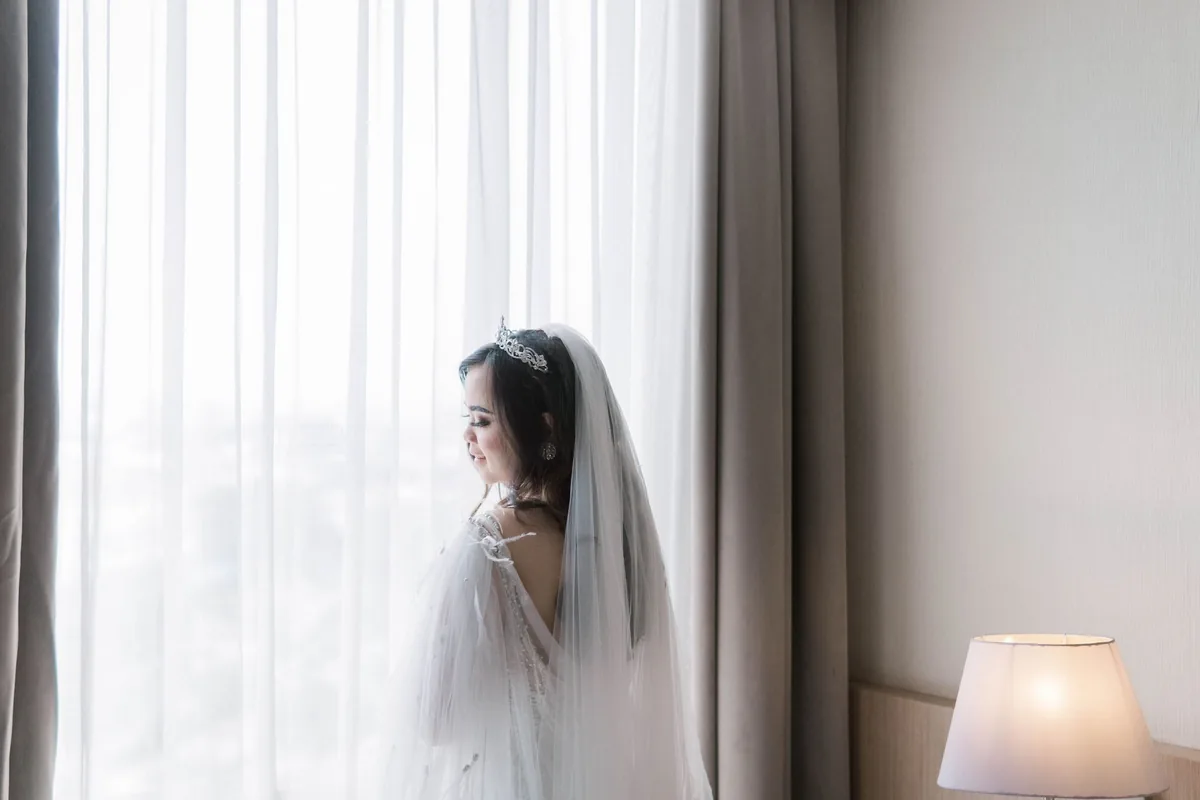
If you wear a size 14 or larger, shopping for a wedding dress is not a separate sport. It is the same process with two extra variables: fewer sample sizes on the rack and a longer alterations plan. Knowing that before your first appointment keeps the day from turning into a hunt for something that happens to fit off the peg.
The brides who leave happy usually do four things in order: take honest measurements, shortlist silhouettes by structure, price alterations at the same time as the dress, and book the order early enough to allow two fittings. Everything below is arranged around that sequence.
Measure first, choose a size second
Bridal sizing is not street sizing. A dress labelled 16 can match a 12 in a high-street shop, and the gap tends to grow as sizes go up. Ignore the number and work from three measurements: full bust, natural waist, and the fullest part of the hip. Add hollow-to-hem, taken from the hollow at the base of your neck to the floor in the shoes you plan to wear, because that number sets the length.
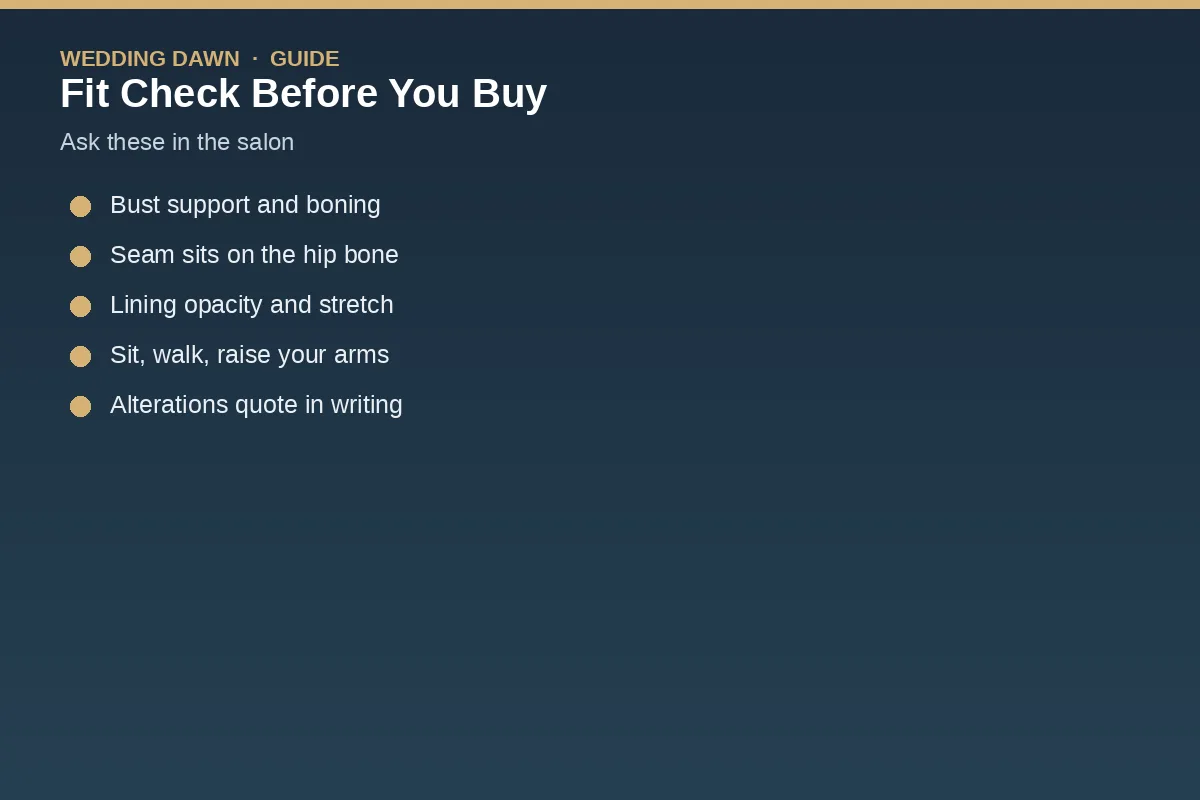
Measure over the bra you intend to wear, keep the tape level and snug but not tight, and write the numbers down. Ask the salon to repeat the measurements; if the two sets differ by more than an inch, measure a third time. When you fall between sizes, order to the largest measurement and plan to take the dress in. Letting out a lined bodice is far more limited than taking it in, and a seam that has been moved twice rarely lies flat.
Choose a silhouette by structure
The most flattering dress is usually the one with enough internal structure to hold its shape without gripping the body. A-line and ballgown skirts skim the hip and give the bodice room to be built properly. Fit-and-flare is a useful middle ground, but check that the seam sits on the hip bone rather than cutting across the fullest point. Sheath and mermaid styles can look beautiful, but they demand a four-way stretch lining and a fitter who has worked with them before.
- A-line: forgiving through waist and hip, and the easiest shape to alter.
- Ballgown: moves volume to the hem, so watch the total weight across a long ceremony.
- Fit-and-flare: defines the waist; sit down in it before you decide.
- Mermaid: the most restrictive; test walking, stairs, and sitting while you are still in the salon.
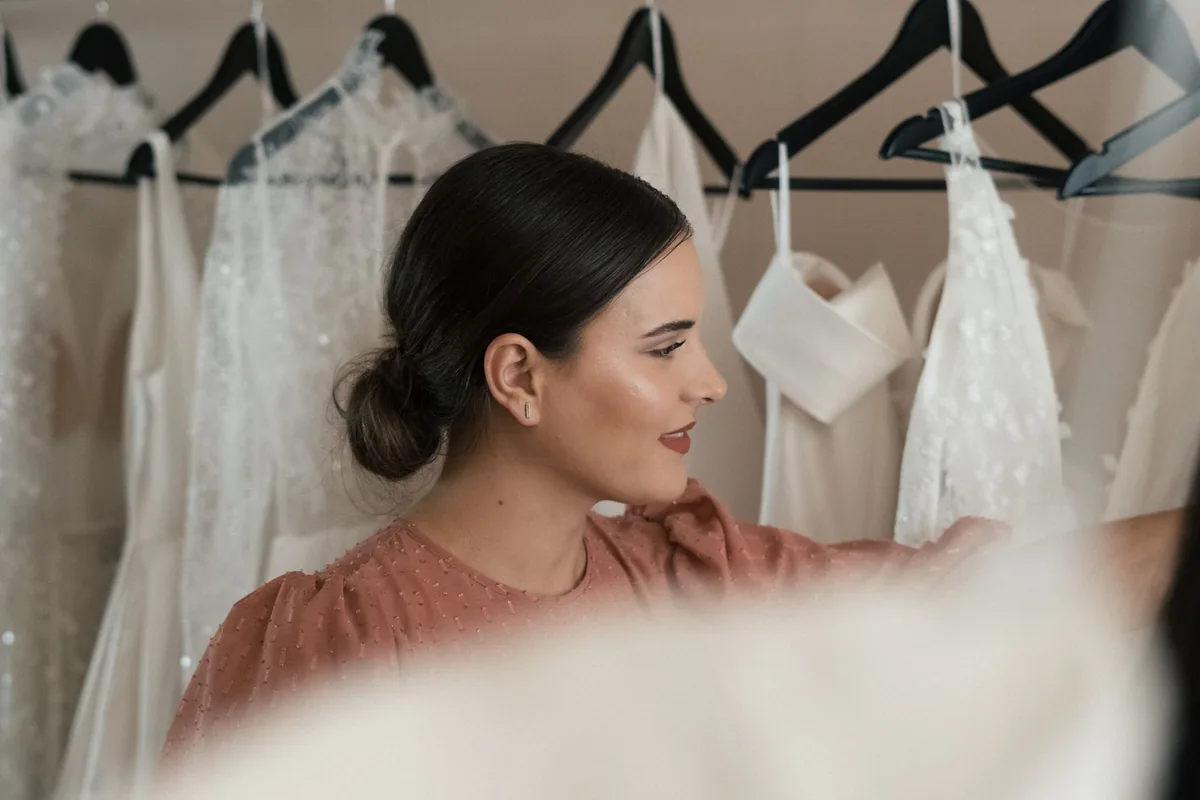
Ask to see the dress on a body close to yours, not only on a size-8 mannequin. Many salons can clip a larger sample or show the same style in another colorway so you can judge the line. If a consultant cannot explain how the bodice is supported, ask someone who can.
Fabric decides how the dress behaves
Structure comes from fabric as much as from the cut. Mikado, duchess satin, and lined crepe hold a clean line and resist clinging. Tulle and organza add volume without weight but need enough layers to stay opaque. Stretch lace over a solid lining moves with you; unlined lace does not.
Put your hand inside the skirt and check the lining. A thin single-layer lining will show every seam and every change in temperature. Sit down, walk a full loop of the salon, and raise your arms. If the bodice gapes at the back or the skirt rides up when you move, the fit is the problem, not your body.
Budget alterations before you fall in love
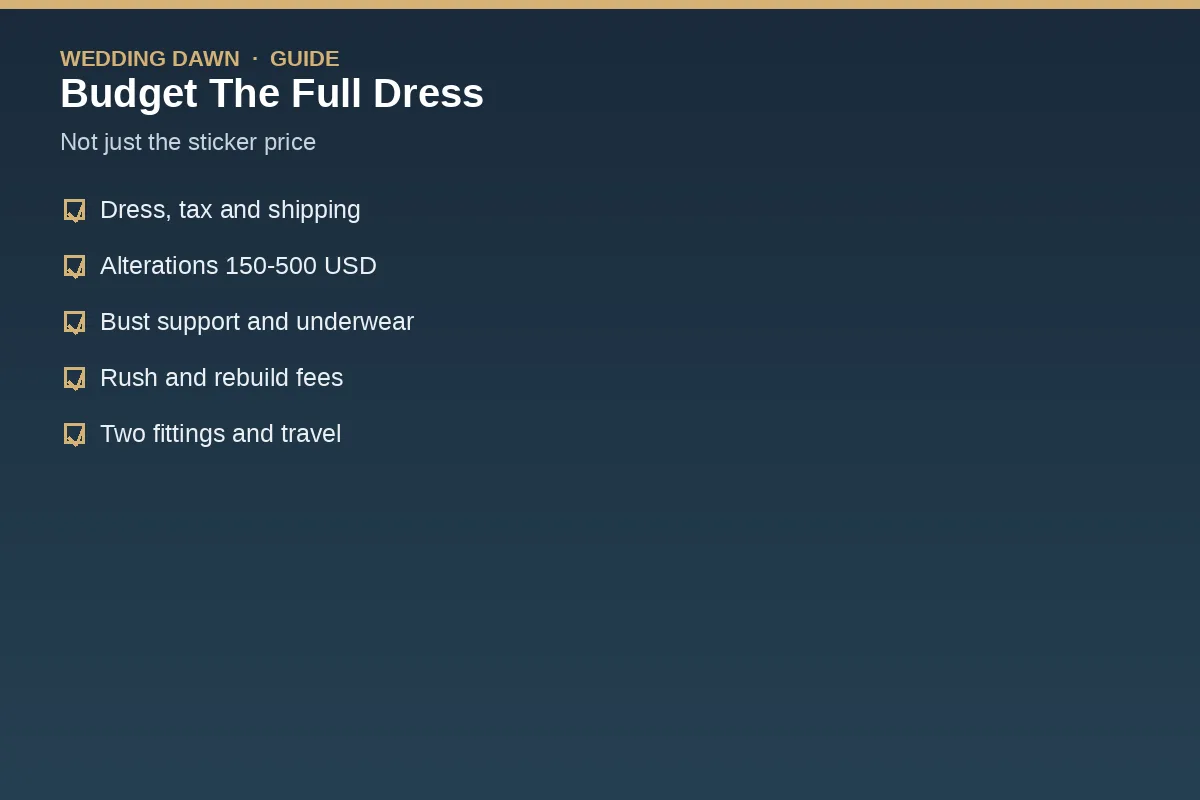
Alterations are the line item brides most often forget. Hemming a multi-layer skirt, taking in a lined bodice, shortening straps, and adding bust support commonly runs from about 150 to 500 dollars depending on the market and the number of layers. Rush work and rebuilding a bodice cost more, and changing the neckline is a separate job.
Ask for an estimate in writing before you pay a deposit, and ask who does the work: in-house or an outside tailor. A dress that fits well on arrival needs less work, which is worth paying a little more for up front. Keep the quote with your contract so there is no argument later.
Underpinnings do half the work
Bring the bra or bustier you plan to wear, plus seamless briefs and any shapewear you actually like. A well-fitted longline bra can change the line of a strapless bodice more than any alteration. Avoid buying new shapewear on the morning of a fitting; wear it once first, so you know whether it rolls or digs.
If you are considering a corset back, try it seated and after a meal. Corsets distribute pressure well, but only when the boning is the right length for your torso. A corset that ends at the wrong point will dig in every time you sit down.
Sample sales and online orders
Sample sales can be excellent value, but samples are usually small and have been tried on many times. Go early, inspect underarm marks, stretched side seams, and missing buttons, and confirm the return policy in writing. If the sample is two sizes too small, the alteration cost can erase the discount.
Made-to-measure online is reasonable when the seller provides a detailed measurement chart, fabric swatches, and a clear remake policy. Order a swatch first, compare it in daylight, and leave at least three months for production, shipping, and local alterations. Read reviews from buyers with a similar body type, not only the five-star ones.
A timeline that leaves room to breathe
Start shopping nine to twelve months before the wedding if you can. Order six to eight months out; most designers quote twelve to sixteen weeks, and peak season stretches that. Book the first fitting six to eight weeks before the date and the final fitting ten to fourteen days out.
Avoid scheduling a fitting immediately after a big meal or during a week when your body holds water. Small fluctuations are normal, and a good fitter plans for them rather than chasing a perfect number on the tape. Bring the shoes and undergarments you will wear on the day to every fitting.
What to ask before you say yes
- Which size will you order, and which measurement drives that choice?
- Who does the alterations, and what is the estimated cost in writing?
- Can I see the dress in natural light, and can I walk and sit in it?
- What are the deposit, cancellation, and storage terms?
- How many fittings are included, and what counts as a rush job?
Take photos from the front, side, and back with permission, then look at them the next day. A dress that photographs well from three angles is usually the right one. If you are unsure, sleep on it; a deposit made under pressure is the most expensive kind.
Common mistakes to avoid
- Ordering by the size you wear in jeans instead of by measurements.
- Buying a dress that needs two sizes of alteration just to save on the sticker price.
- Leaving the bust-support conversation until the first fitting.
- Trying on dresses in shoes you will not wear on the day.
- Booking the final fitting less than two weeks before the wedding.
- Paying a deposit without a written alterations estimate.
A wedding dress should feel like your clothes, only better made. When the measurements are honest, the structure is right, and the alterations budget is already set aside, the size on the label stops mattering, and the appointment becomes enjoyable again.
Step by step
Measure over the right bra
Take bust, waist, hip and hollow-to-hem measurements with the bra and shoes you will wear on the day.
Shortlist three salons
Ask whether they stock larger samples or can order them before you book an appointment.
Try three silhouettes
One structured A-line, one fit-and-flare, and one style you had not considered.
Get alterations in writing
Ask for an itemised estimate and who does the work before you pay a deposit.
Book two fittings
Schedule the first six to eight weeks out and the final ten to fourteen days before the wedding.
Quick checklist
- Measuring tape, notepad, and the bra you plan to wear
- Seamless briefs and any shapewear you have already tested
- The shoes you will wear on the day, or the same heel height
- Photos of necklines and sleeves you like
- A written list of questions for the consultant
- A budget that includes alterations, tax, and shipping
- Confirmation of the return and cancellation policy
- Names of two local tailors as a backup
- Enough time for at least two fittings
- Someone who will give you an honest opinion, not just applause
FAQ
What size wedding dress should I order if I am a 16?
Order by your measurements, not by your jeans size. Bridal sizing commonly runs one to two sizes larger than street clothing, so a 16 in a shop may be an 18 or 20 in a bridal gown. If you fall between sizes, order to the largest measurement and have the dress taken in.
Can a plus-size dress be taken in without losing its shape?
Yes, within limits. Taking in a bodice by one size is routine; taking it in by two or more can distort the neckline and the position of the boning. Ask the fitter to explain how the seams will be moved and what the result will look like from the back.
How far in advance should I order?
Six to eight months before the wedding is comfortable, and nine to twelve months is safer if you are ordering a made-to-measure gown or marrying in peak season. Production commonly takes twelve to sixteen weeks before alterations begin.
Which silhouette is most flattering on a curvy figure?
There is no single answer, but A-line and ballgown shapes are the most forgiving because they skim the hip and support a properly built bodice. Fit-and-flare can work well when the seam sits on the hip bone. Try several shapes in one appointment before ruling any out.
Is it safe to buy a wedding dress online?
It can be, if the seller offers a detailed measurement chart, fabric swatches, a clear return or remake policy, and reviews from buyers with a similar body type. Order a swatch first and leave three months for production, shipping, and local alterations.
Sources
- CDC — Assessing your weight and measuring your waist How to take consistent body measurements at home.
- FTC Consumer Advice — Return policies What a return policy should state before you buy, including sale items.
- USA.gov — Consumer complaints Where to file a complaint if an order or alteration agreement goes wrong.